

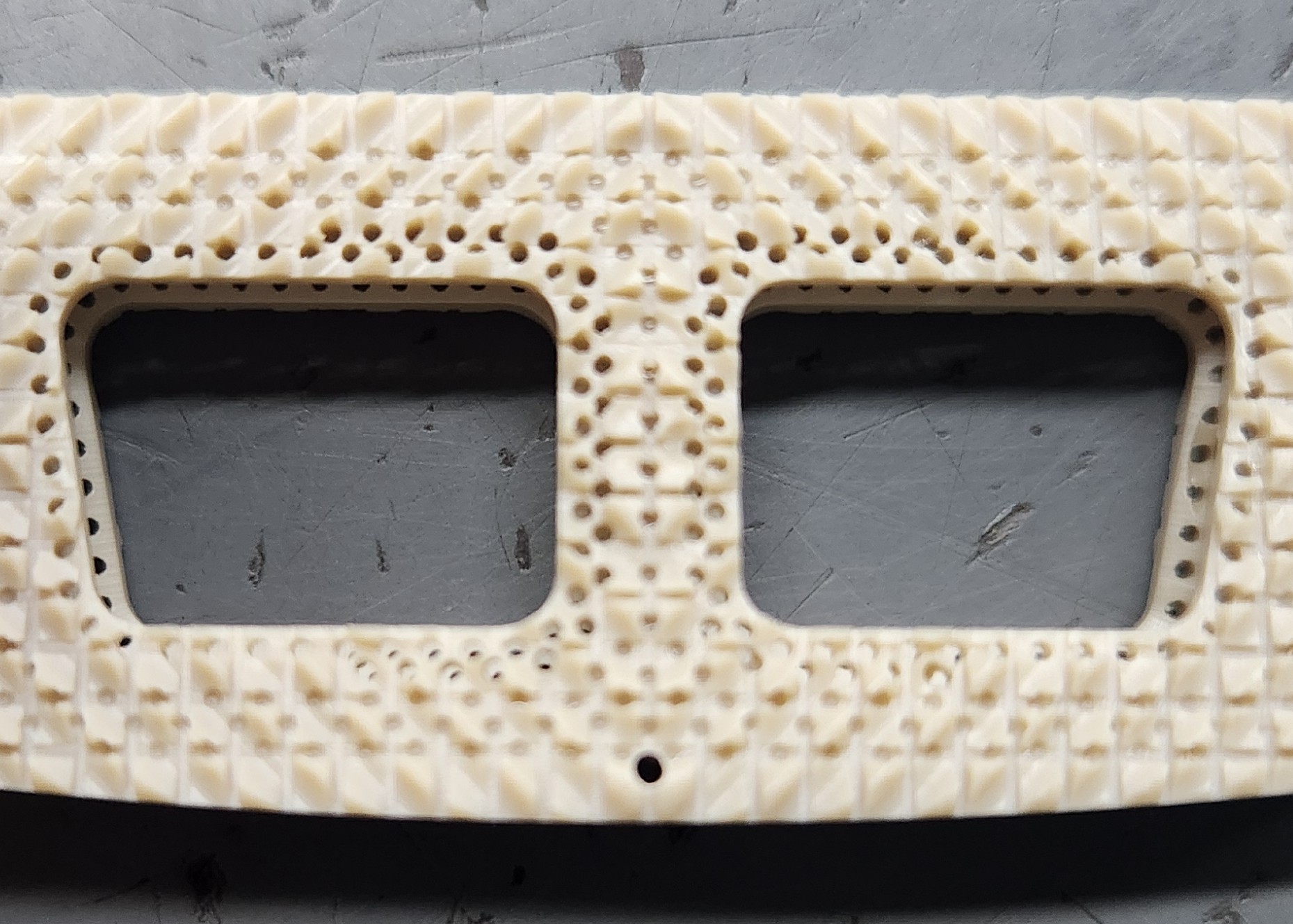
PEEK Implants
PEEK (polyether ether ketone) is a high-performance polymer commonly used in spinal cages, orthopedic implants, and other implantable medical devices due to its strength and durability. While machining allows manufacturers to create the complex geometries required for these applications, the manufacturing process can leave behind burrs and debris inside small holes, slots, and other difficult to access areas. These parts need deburring to maintain cleanliness standards and to ensure no residual material breaks off in the human body.
The Challenge of Deburring PEEK Implants
Machined PEEK implants often contain intricate features that can make burr removal difficult. Small holes, recessed areas, and complex geometries may be challenging to access using traditional manual burr removal methods. As implant designs become more sophisticated, manufacturers need deburring processes that can effectively remove burrs while maintaining part quality, integrity and cleanliness.
Traditional manual methods can be time consuming and may not consistently reach every feature of a complex implant. Plus, manual deburring typically yields variable results day to day, operator to operator.
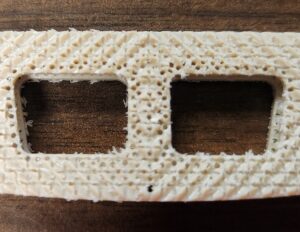
PEEK implant before processing, showing burrs & debris and machined features.
How Our Deburring Process Works
In this case, cryogenic deburring was used first to remove significant burrs from components. While effective in many applications, this process was not able to remove all the burrs on these parts.
Then dry ice deburring helped eliminate the remaining burrs while cleaning the parts. This occurs in a single operation, reducing secondary processing requirements and improving overall efficiency. The dry ice process is EPA, USDA, and FDA approved.
The dry ice process uses high-velocity dry ice particles that impact the surface of the part and immediately sublimate, transitioning directly from a solid to a gas. Since the dry ice disappears upon contact, the process leaves no secondary blasting media, or residue behind.
Advantages Over Traditional Deburring Methods
Utilizing a two step process can still yield significant advantages over hand deburring. First, it yields a more consistent result. Second, it may be less expensive. Third, it still reduces the time to deburr each part.
Cryogenic deburring offers a batch process that in this case removed 80% of the burrs from the parts. Dry ice deburring removed the remaining 20% of the burrs, especially the ones located in the holes. Dry ice blasting not only removed the remaining burrs, but also cleaned the parts.
Improving Quality and Efficiency
Another advantage of dry ice burr removal is process consistency. Parts can be securely fixtured and processed under controlled conditions, helping manufacturers achieve repeatable results while reducing labor associated with manual techniques. Consistent results are especially important in medical device manufacturing, where quality and cleanliness standards are critical.
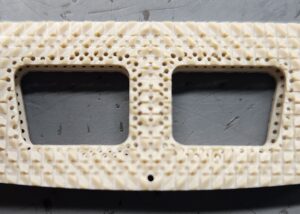
PEEK implant after deburring, showing clean edges and burr-free features.
Conclusion
As medical implants become more complex, manufacturers need deburring methods that ensure both precision and cleanliness. Two step process provides an efficient solution by removing the burrs and cleaning remaining debris in hard-to-reach features. This process improves consistency, reduces secondary cleaning steps, and supports the high-quality standards required for manufacturing implantable grade PEEK medical devices.
To learn more, give us a call at (508) 459-7447 or email us at info@nitrofreeze.com.